


 Myopia management
 Dry Eye Treatment
Beyond the Eye Chart: How TSO's OCT Eye Scans Catch Glaucoma and Macular Degeneration Before Symptoms Start
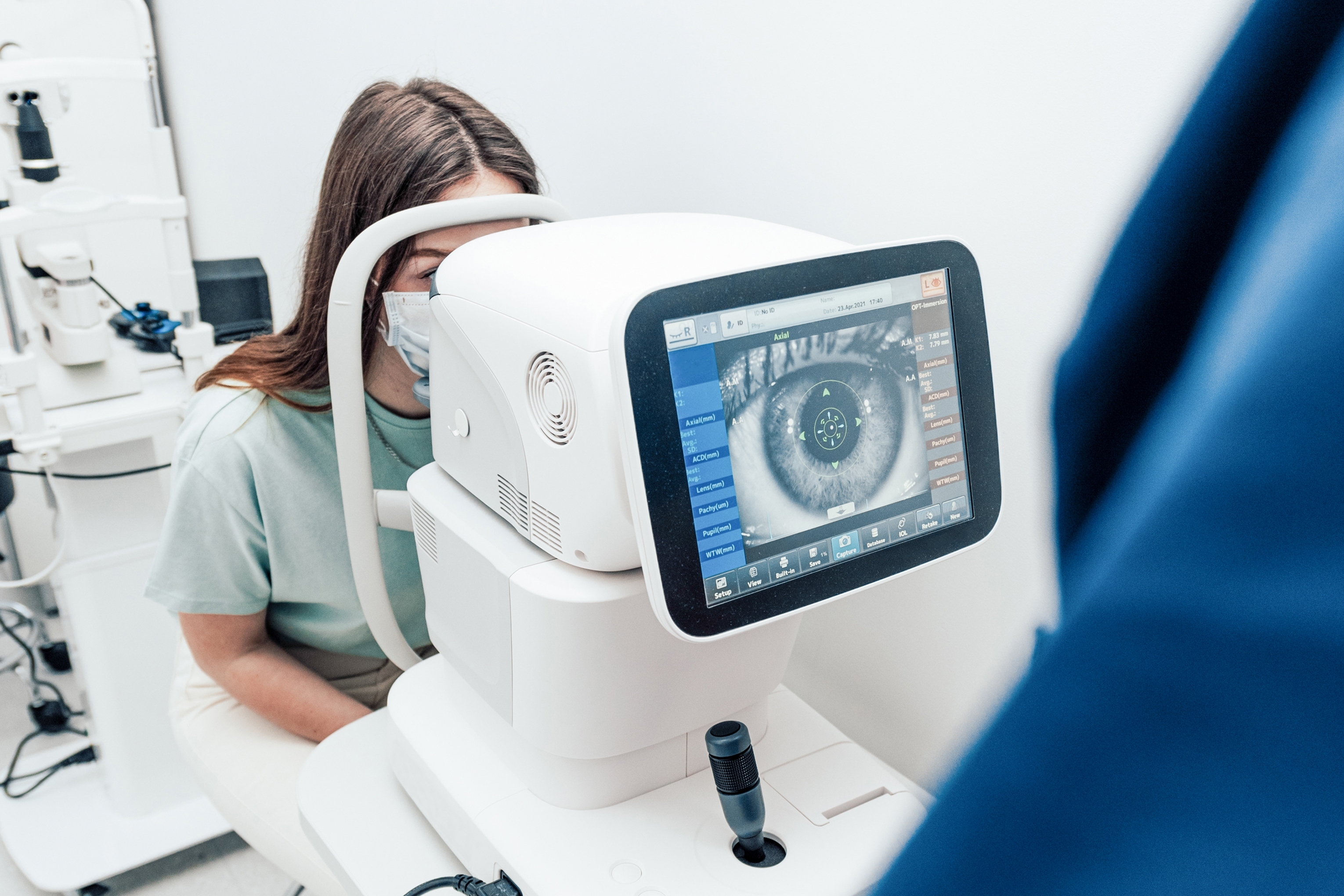
Beyond the Eye Chart: How TSO's OCT Eye Scans Catch Glaucoma and Macular Degeneration Before Symptoms Start
Reading the smallest line on an eye chart is important, but clear vision does not always mean your eyes are healthy. Conditions such as glaucoma and macular degeneration can begin changing delicate structures inside the eye before you notice blur, blind spots, or other obvious symptoms.
At Texas State Optical New Braunfels, comprehensive eye care goes beyond determining your glasses prescription. Advanced diagnostic testing, including Optical Coherence Tomography, or OCT, can provide detailed information about the retina and optic nerve, helping your eye doctor identify changes that deserve closer monitoring.
What Is an OCT Eye Scan?
OCT is a non-invasive imaging technology that uses light waves to create detailed cross-sectional images of structures at the back of the eye. You can think of it as allowing your eye doctor to examine individual layers of the retina rather than simply viewing its surface.
The scan is quick and does not involve radiation. These highly detailed images can reveal subtle structural changes and provide measurements that can be compared during future visits.
For New Braunfels patients with certain risk factors or suspicious examination findings, this additional information can be valuable for detecting and monitoring eye disease.
How OCT Helps Detect Glaucoma
Glaucoma is a group of eye diseases that can progressively damage the optic nerve. One reason it is especially concerning is that early glaucoma may develop without pain or noticeable vision loss.
A comprehensive glaucoma evaluation may involve multiple forms of testing because no single measurement provides the entire answer. Depending on your individual needs, your eye doctor may evaluate:
- Eye pressure
- The appearance and health of the optic nerve
- Retinal nerve fiber layer thickness with OCT imaging
- Peripheral vision through visual field testing
- Corneal thickness and other glaucoma risk factors
- Changes compared with previous examination results
OCT can measure the retinal nerve fiber layer surrounding the optic nerve. Thinning in these tissues may help your eye doctor recognize suspicious changes before you personally notice significant vision loss.
Why Macular Degeneration Requires a Closer Look
Age-related macular degeneration, or AMD, affects the macula, the central area of the retina responsible for detailed vision. This is the part of your sight you rely on when reading, driving, recognizing faces, or looking directly at an object.
Early macular degeneration may cause few noticeable symptoms. OCT imaging can show changes within the retinal layers, including abnormalities that may not be obvious from an eye chart alone.
For patients who have already been diagnosed with macular degeneration, repeated OCT scans can also help document whether the retina remains stable or develops changes that may require additional evaluation or referral.
Baseline Imaging Makes Future Changes Easier to Spot
One of the greatest advantages of advanced eye imaging is the ability to compare results over time. A single OCT scan provides useful information, but establishing a baseline can make future scans even more valuable.
During later exams, your New Braunfels eye doctor can look for measurable changes in the optic nerve or retina rather than relying only on how your eyes appear during one visit.
This is particularly important for conditions that progress gradually. Small changes detected during routine monitoring can sometimes provide an earlier warning than symptoms alone.
Who May Benefit From Advanced Eye Imaging?
Your eye doctor will determine which testing is appropriate based on your age, family history, medical conditions, eye pressure, examination findings, and other risk factors.
Patients with a family history of glaucoma or macular degeneration may require closer monitoring. Diabetes, certain medications, advancing age, and previously detected retinal or optic nerve changes can also influence how frequently additional testing is recommended.
Even if you see clearly, routine comprehensive eye exams remain an important part of protecting your long-term sight. An eye chart measures visual clarity, while medical eye testing provides a much broader picture of what is happening inside your eyes.
If you are due for a comprehensive eye exam or need monitoring for glaucoma, macular degeneration, or other eye health concerns, schedule an appointment with Texas State Optical New Braunfels at 1705 S Walnut Ave., Suite 100, New Braunfels, TX 78130, or call (830) 629-1248 to take a closer look at your eye health before subtle changes become noticeable.
Quick Links
Helpful Articles
article_category: products
article_category: psychiatry
article_category: faqs
article_category: cats
article_category: general
article_category: services
article_category: technology
article_category: dogs
article_category: restorative
article_category: vision therapy
article_category: contact lenses
article_category: health
article_category: conditions
article_category: eye surgery co-management
article_category: exotic
article_category: cosmetic
article_category: surgical procedures
article_category: aesthetics
article_category: preventative
article_category: ocular disease management
article_category: eyeglasses
article_category: eye health
article_category: large animal
[]
article_category: psychiatry
article_category: faqs
article_category: cats
article_category: general
article_category: services
article_category: technology
article_category: dogs
article_category: restorative
article_category: vision therapy
article_category: contact lenses
article_category: health
article_category: conditions
article_category: eye surgery co-management
article_category: exotic
article_category: cosmetic
article_category: surgical procedures
article_category: aesthetics
article_category: preventative
article_category: ocular disease management
article_category: eyeglasses
article_category: eye health
article_category: large animal
[]
Flowbite is an open-source library of interactive components built on top of Tailwind CSS including buttons, dropdowns, modals, navbars, and more.
Check out this guide to learn how to get started and start developing websites even faster with components on top of Tailwind CSS.

All Eyecare Services
We offer a wide variety of eye care services to the New Braunfels community. Contact us with any questions about our services.

Keep In Touch
For non-urgent questions or to learn more about our services, contact us today!

Contact Information
Office Hours
- Monday 8:30 AM - 5:30 PM
- Tuesday 8:30 AM - 5:30 PM
- Wednesday 8:30 AM - 5:30 PM
- Thursday 8:30 AM - 5:30 PM
- Friday 8:00 AM - 2:00 PM
- Saturday Closed
- Sunday Closed
- Monday 9:00am - 6:00pm
- Tuesday 9:00am - 6:00pm
- Wednesday 9:00am - 6:00pm
- Thursday 9:00am - 6:00pm
- Friday 9:00am - 6:00pm
- Saturday 10:00am - 2:00pm
- Sunday Closed
- Monday 8:00am - 5:00pm
- Tuesday
- Wednesday
- Thursday
- Friday
- Saturday
- Sunday
© 2026 Texas State Optical New Braunfels. All rights Reserved - Accessibility Statement - Privacy Policy - Sitemap
Managed and Designed by 